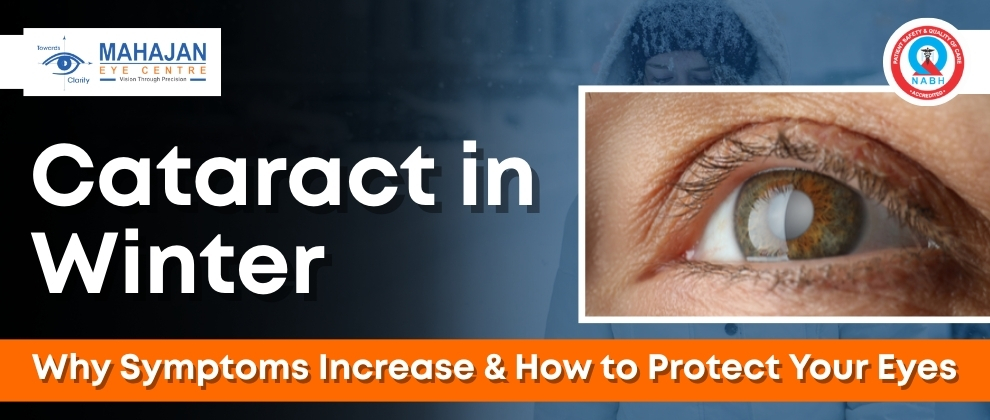
Cataract in Winter: Why Symptoms Increase & How to Protect Your Eyes
Cataract is one of the most common eye conditions in India, especially among people above 50. While cataract can occur in any season, many patients notice that their symptoms worsen during winter. At Mahajan Eye Centre, we see a clear rise in cataract-related complaints every winter season.
This blog explains why cataract feels worse in cold weather, early signs to watch for, and when to consider surgery.
Why Does Cataract Feel Worse During Winter?
1. Winter Increases Dryness in the Eyes
Cold air and low humidity cause dryness, leading to blurred or fluctuating vision.
Dry eyes make existing cataract symptoms appear more prominent.
2. More Glare & Light Sensitivity
Winter sunlight is lower, and people often experience glare from headlights and bright winter afternoons, making cataract-related glare more uncomfortable.
3. Pupils Expand in Low Light
During winter, days are shorter and lighting conditions are dimmer.
When pupils dilate, the cataract blocks more light → vision becomes hazier.
4. Diabetes Worsens in Winters
Winter is known for rising blood sugar levels.
High sugar accelerates cataract progression, especially in diabetic patients.
5. Heating Devices Dry the Eyes
Room heaters reduce moisture in the room, leading to dry, irritated eyes and blurred vision—aggravating cataract symptoms.
Early Symptoms of Cataract to Notice This Winter
- Blurred or cloudy vision
- Difficulty in night driving
- Increased glare from headlights
- Faded colors
- Double vision
- Frequent changes in eyeglass number
- Needing brighter light for reading
If you are noticing these changes recently, winter may be making your cataract more noticeable.
Is Winter a Good Time for Cataract Surgery?
Yes. Winter is actually one of the best seasons for cataract surgery.
Here’s why:
- Cool weather reduces infection risk
- Healing is faster and more comfortable
- Less sweating → easier postoperative care
- Fewer allergy-related issues
- Patients find recovery smoother during winters
At Mahajan Eye Centre, we perform MICS (Micro-Incision Cataract Surgery)—a painless, blade-free, stitch-less technique with fast recovery and excellent results.
When Should You Consider Cataract Surgery?
You should go for cataract surgery if:
- Your vision is affecting daily work
- Night driving has become unsafe
- You have frequent changes in glasses
- You experience glare or cloudy vision continuously
- Doctor confirms that cataract has become significant
Delaying surgery for too long can make cataract harder and increase surgical complexity.
Winter Eye Care Tips for Cataract Patients
- Use a good lubricating eye drop for dryness
- Increase indoor humidity
- Avoid direct heater airflow
- Wear sunglasses during the day
- Control diabetes & blood pressure
- Ensure proper lighting while reading or working
These small steps help reduce winter-related vision discomfort.
Mahajan Eye Centre – Safe & Advanced Cataract Care
We offer:
- MICS Cataract Surgery
- Accurate IOL Power Calculation
- Latest monofocal, multifocal &toric lenses
- Quick, painless, same-day procedure
- Expert surgeons & advanced technology
Your comfort and vision clarity are our priority.
Book Your Winter Cataract Consultation
If your cataract symptoms are increasing this season, don’t wait. Early evaluation ensures better outcomes.